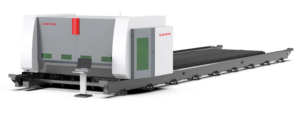
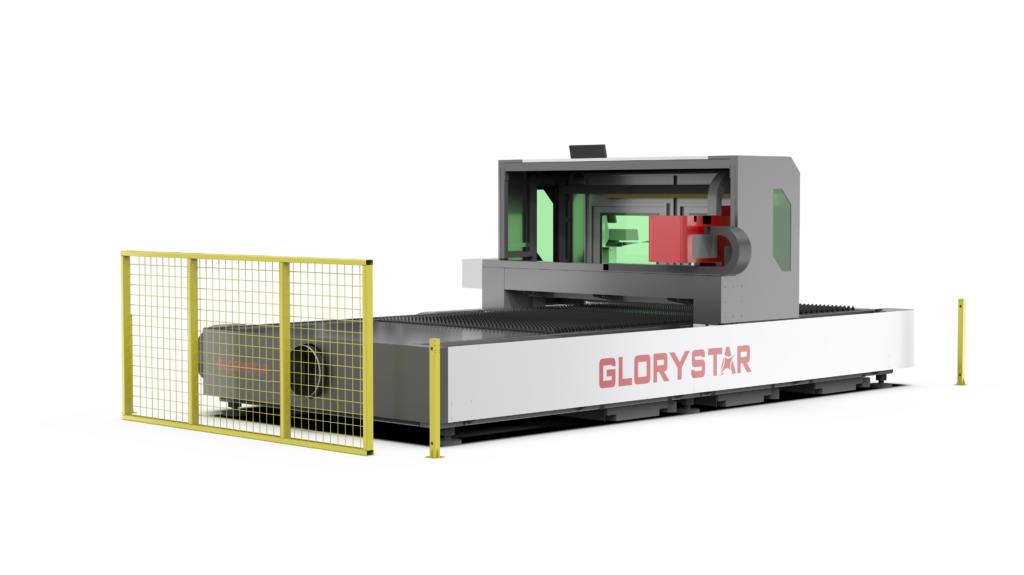
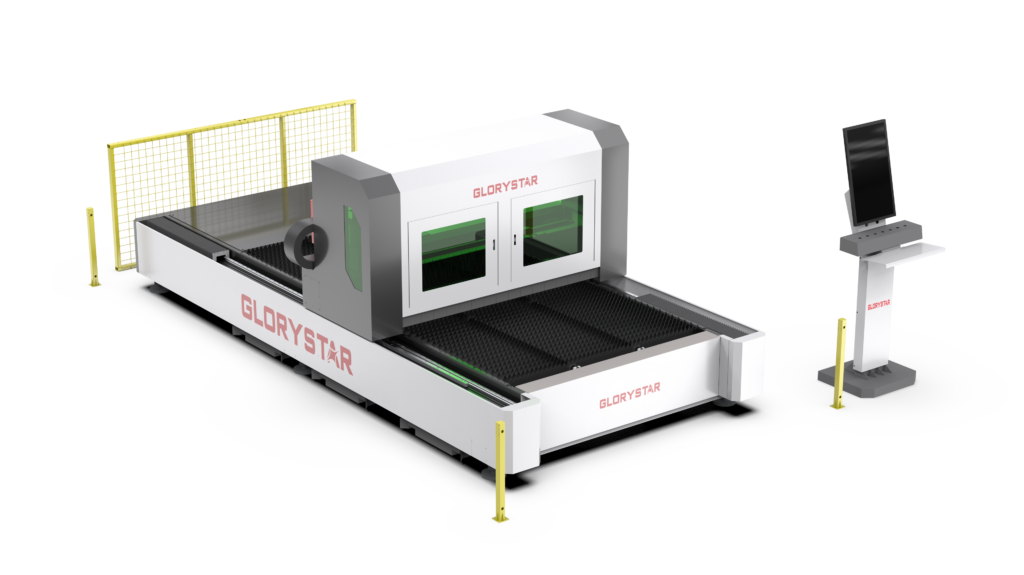
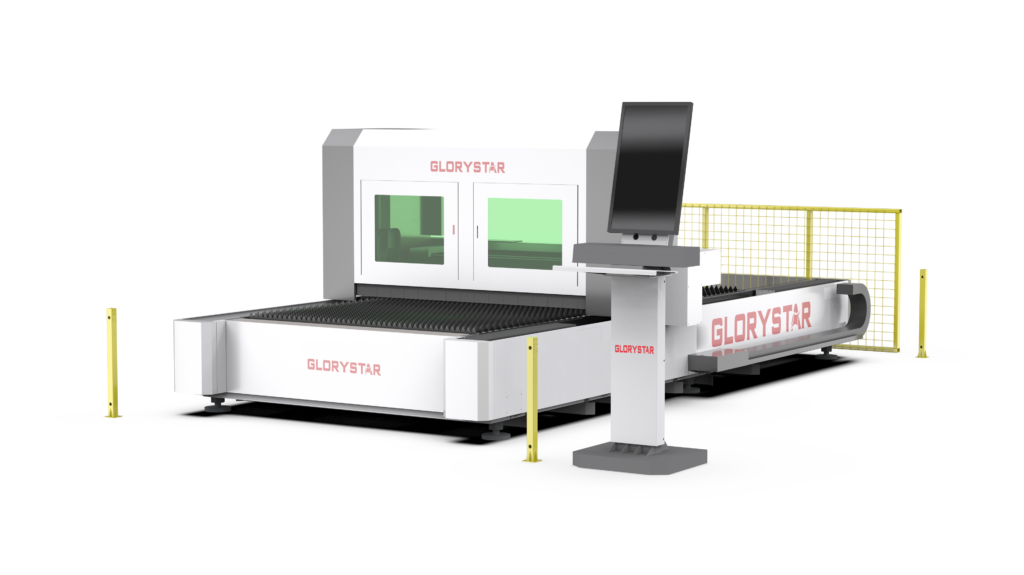
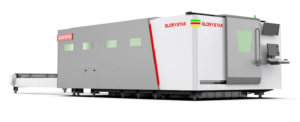
The Glorystar GS-CS Series combines large-format cutting capacity with the accessibility of an open-table gantry design. Built for structural steel fabricators, steel service centers, shipbuilders, heavy equipment manufacturers, and other fabricators processing oversized materials and heavy plate, the GS-CS delivers a flexible, high-performance solution for demanding fabrication applications.
The Glorystar GS-CS Series Large-Format Fiber Laser Cutting Machines are designed for manufacturers processing oversized sheets, large plate, and structural fabrication projects. Available in multiple large-format configurations and laser power options from 3 kW to 30 kW, the GS-CS Series combines heavy-duty construction with a modular worktable design that supports long-term serviceability and lower ownership costs. Well suited for structural steel fabrication, steel service centers, heavy equipment manufacturing, transportation equipment production, and industrial fabrication applications, the GS-CS Series provides the capacity needed for large-scale processing while maintaining cutting accuracy and productivity.
Bramac Machinery can help evaluate material sizes, facility constraints, production requirements, and future growth plans to identify the most appropriate GS-CS configuration for your operation.
Large-Format Open Gantry Design
Heavy-Duty Welded Machine Bed
Dual-Drive Motion System
Intelligent Bochu Controls
Flexible Fabrication Platform
Process Oversized Materials
Improve Fabrication Flexibility
Maintain Cutting Accuracy
Lower Long-Term Ownership Costs
Support Large-Scale Manufacturing
Click the dropdowns below to view detailed specifications for the GS-CS Series.
GS-3015CS | GS-6225CS | GS-12025CS | GS-13030CS | ||
Table Sizes | mm | 3048 x 1524 | 6300 x 2540 | 12000 x 2500 | 13000×3000 |
ft | 10 x 5 | 20.7 x 8.3 | 40 x 8 | 43 x 10 | |
Typical Laser Power* | kW | 3 / 6 / 12 | 6 / 12 | 12 / 20 / 30 | |
Max Positioning Speed | m/min | 120 | 110 | ||
ft/min | 393.7 | 361 | |||
Max Acceleration | 1.2 | 1.5 | |||
Positioning Accuracy | metric | ≤0.03 mm/m | |||
imperial | 0.00118in/39.4in | ||||
Repeat Position Accuracy | mm | ≤±0.02 | |||
in | 0.00079 | ||||
Control | BOCHU CNC | ||||
Drive System | Rack & Pinion Dual Drive | ||||
Monitor | 21″ LCD | 27″ LCD | |||
Power Requirement | 380V 3-Phase | ||||
Protection Rating | IP51 | ||||
*Power ranges shown reflect standard configurations available through Glorystar North America. Additional configurations may be available based on application requirements and market availability. | |||||
https://bramacmachinery.com/glorystar-laser/gs-ce-pro-series/
https://bramacmachinery.com/glorystar-laser/gs-cl-series/
Looking to Complete Your Fabrication Workflow?
GS-HD Structural Steel Processing: Expand beyond plate cutting with automated processing of beams, channels, angles, and structural steel components.
*page under construction
GB Series Bending Machines: Handle large fabricated components and heavy-duty bending applications with advanced CNC press brake technology.
https://bramacmachinery.com/glorystar-laser/bending-machine/
AH-W & GW-H Laser Welders: Complete structural assemblies and heavy fabricated components with high-productivity laser welding solutions.
https://bramacmachinery.com/glorystar-laser/laser-welders/
A: The GS-CS Series is Glorystar’s large-format sheet metal laser platform, designed for manufacturers processing oversized sheets, heavy plate, and structural fabrication projects. Combining a heavy-duty open gantry design with a modular worktable architecture, the GS-CS Series delivers the capacity, flexibility, and serviceability required for demanding industrial fabrication environments.
Key advantages include:
The GS-CS Series is ideal for manufacturers that require more cutting capacity than traditional sheet laser platforms while maintaining the flexibility to process a wide range of large-format fabrication projects.
A: The GS-CS Series is designed to process the most common metals used in fabrication and manufacturing operations.
Typical materials include:
The machine is available with multiple laser power options and is designed to provide productive cutting across a wide range of material thicknesses, from thin-gauge sheet metal to heavier plate applications. Actual cutting capacity depends on material type, laser power, desired edge quality, and production speed requirements.
Bramac works with customers to evaluate their material mix, production requirements, and future growth plans to help determine the appropriate laser power and machine configuration for their application.
A: The GS-CS Series is a strong fit for manufacturers that need precision sheet metal cutting but do not require the nonstop throughput of an exchange-table system.
Common industries include:
Common applications include:
The machine’s combination of precision, flexibility, and enclosed operation makes it suitable for a wide range of fabrication environments.
A: The GS-CS Series utilizes a modular worktable design that simplifies maintenance, reduces repair costs, and supports long-term machine ownership.
Benefits of the modular design include:
Unlike traditional monolithic worktables that may require extensive repairs or full replacement when damaged, the GS-CS modular platform allows maintenance to be performed on specific sections of the table. This design helps improve long-term equipment usability while reducing the cost and disruption associated with major repairs.
For manufacturers processing large plate, structural components, and heavy materials, the modular design can provide meaningful long-term maintenance and ownership advantages.
A: Both machines are designed for sheet metal processing, but they target different operating priorities.
Choose the GS-CS Series if you:
Choose the GS-CL Series if you:
The GS-CS Series is often selected by manufacturers seeking the advantages of an enclosed cutting environment, while the GS-CL Series is a strong solution for shops focused on affordability and production flexibility.
Bramac can help compare the GS-CS and GS-CL platforms based on your materials, production goals, facility requirements, and budget to determine which system delivers the best long-term return on investment.