RoboRail

RoboRail, offered by HGG Group

All-in-One Robotic Plasma Cutting Machine for Miscellaneous Steel Fabrication

The HGG RoboRail combines advanced robotic plasma cutting, precision 3D profiling, and intelligent CAD/CAM integration in a compact, all-in-one solution for miscellaneous steel fabrication. Designed to process round pipe, square and rectangular tubing, channels, angles, and flat bar, the RoboRail automates complex cuts, copes, holes, notches, and layout marking with exceptional consistency. Featuring a high-precision Stäubli robotic arm, Hypertherm plasma cutting technology, and an intuitive operator interface, the RoboRail helps fabricators reduce manual layout, minimize production errors, and manufacture complex steel components faster and more efficiently.

RoboRail, offered by HGG Group

About RoboRail

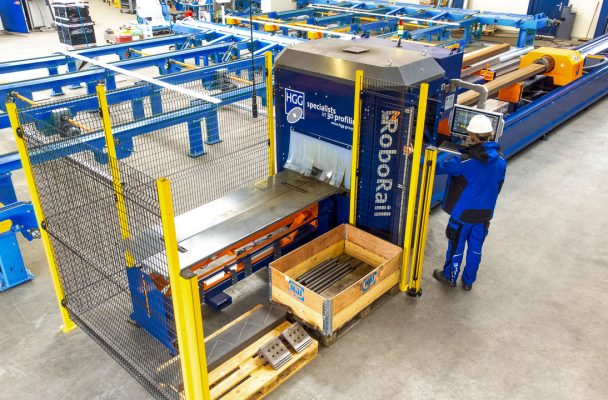
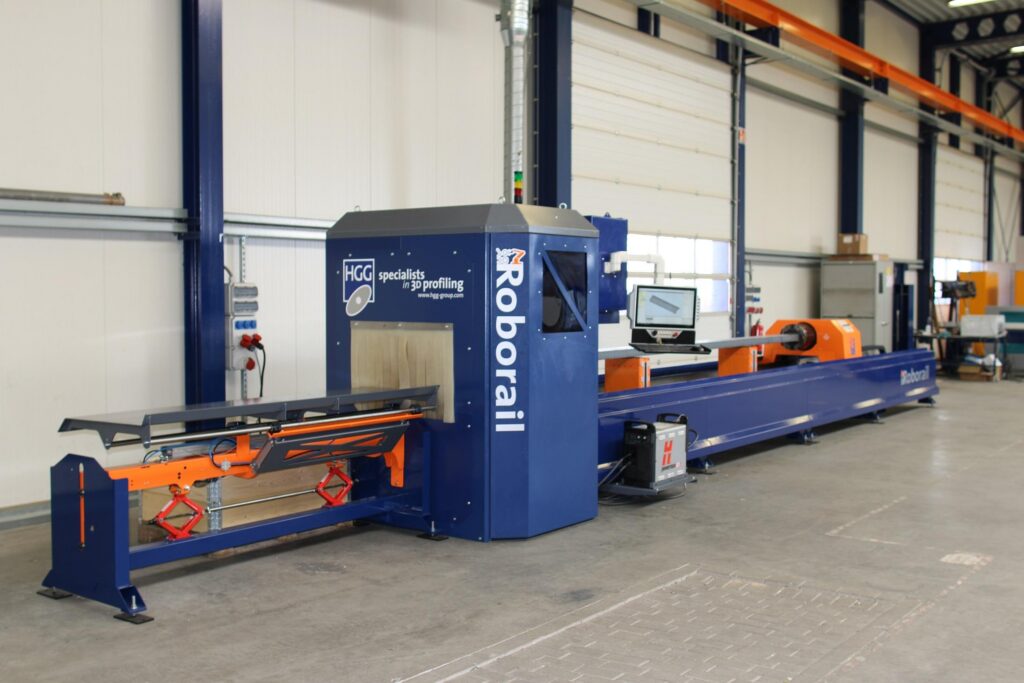
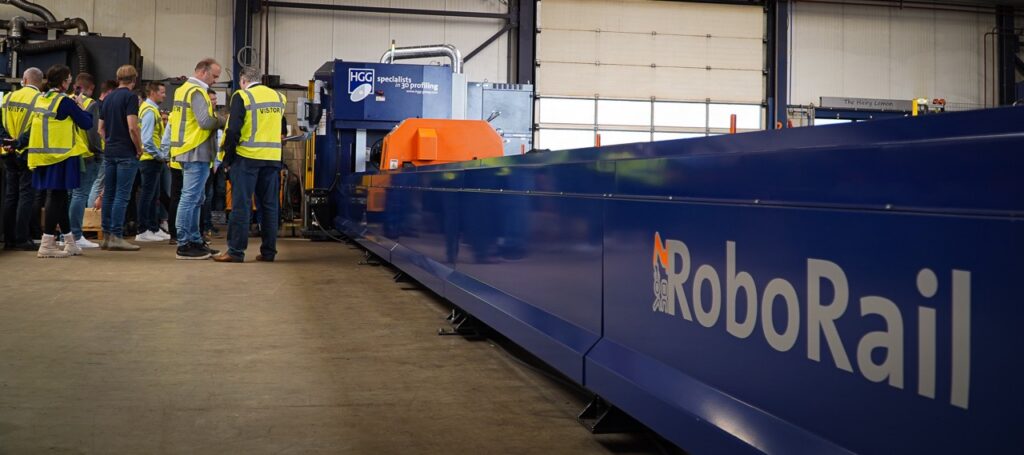
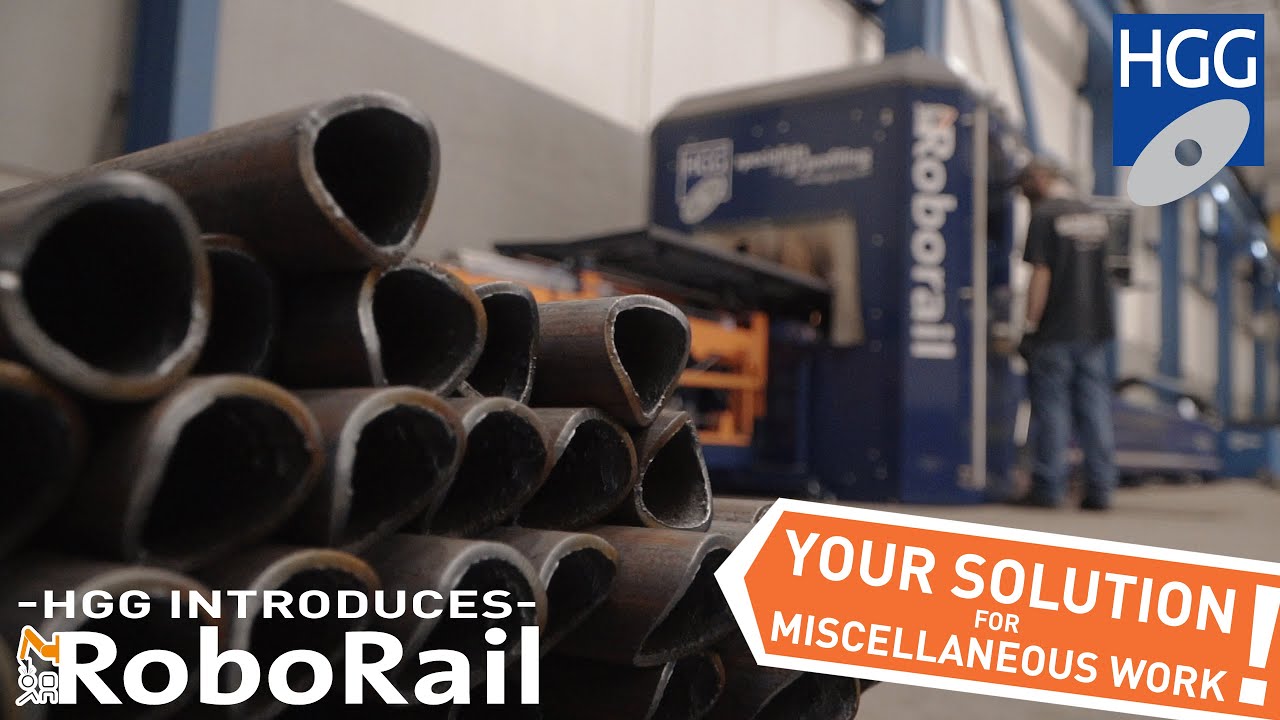
The HGG RoboRail is a compact, all-in-one robotic plasma cutting machine designed to automate the cutting and profiling of miscellaneous steel components. Engineered for fabrication shops producing stairs, handrails, railings, structural supports, and custom steel assemblies, the RoboRail combines multiple cutting and layout operations into one efficient production system.

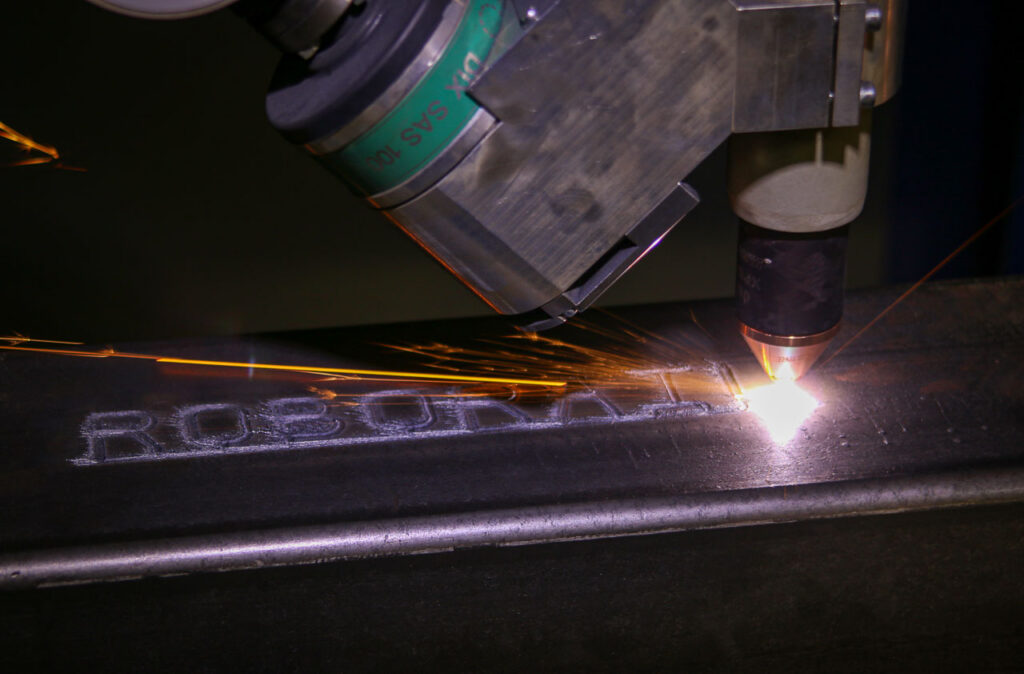
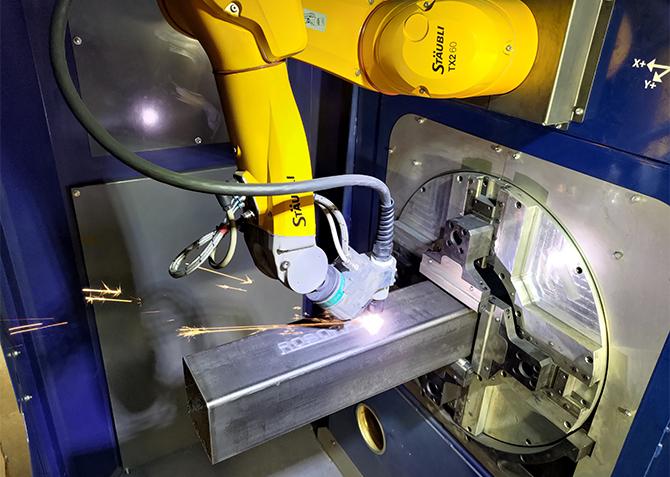
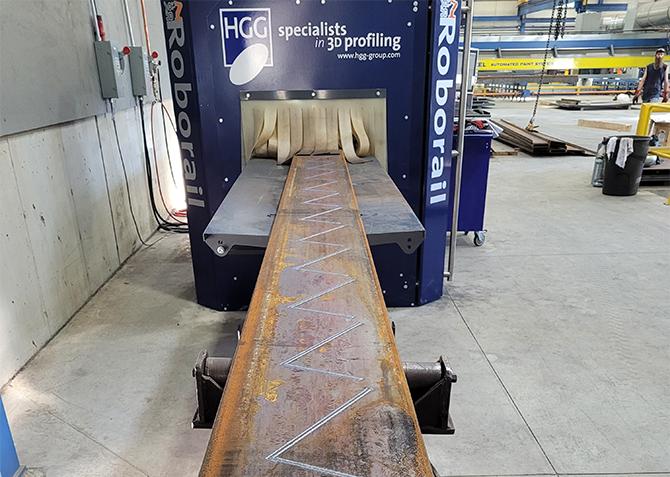
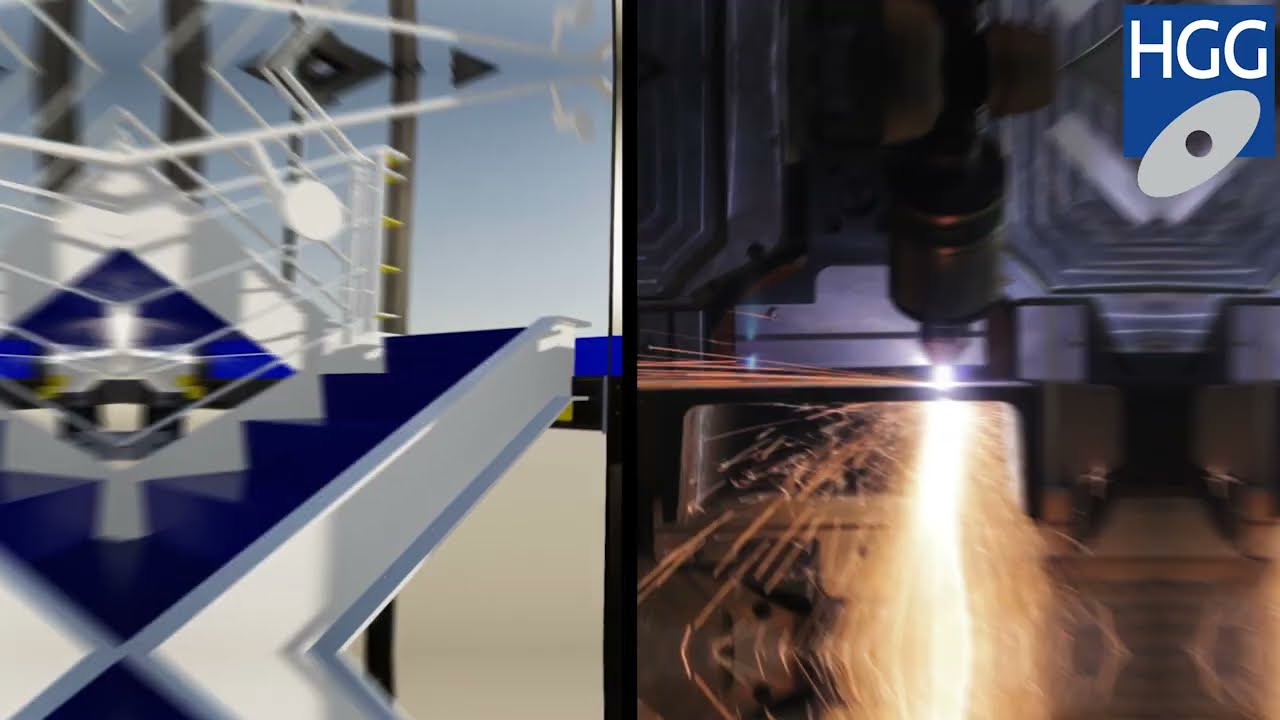
Using a high-precision Stäubli industrial robot and Hypertherm plasma cutting technology, the RoboRail processes a wide variety of materials, including round pipe, square and rectangular tubing, channels, angles, and flat bar. The machine performs cut-to-length operations, copes, notches, holes, and layout marking directly from digital design information, helping reduce manual measuring, cutting, and secondary fabrication work.

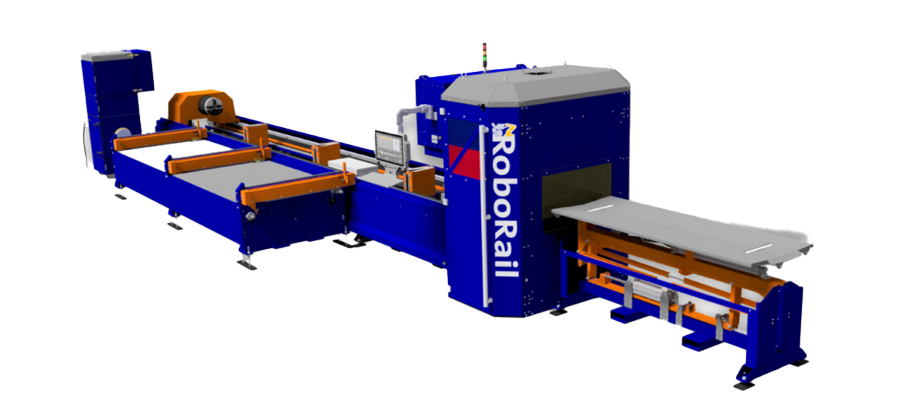
The RoboRail features a protected cutting environment, stable heavy-duty machine base, and configurable material handling system. Its compact footprint makes it an excellent choice for shops seeking to introduce robotic automation without dedicating extensive floor space to multiple fabrication machines.

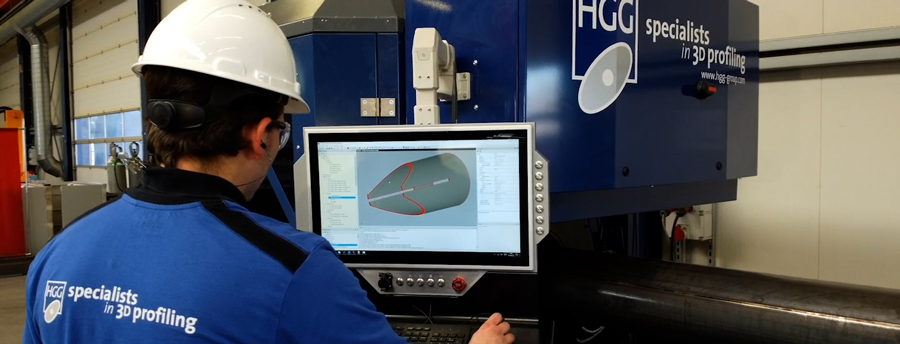
Advanced CAD/CAM integration allows the RoboRail to process DSTV and STEP files from compatible detailing software, including SDS2, Tekla Structures, SolidWorks, and Autodesk Inventor. This direct connection between engineering and production helps minimize programming time, reduce human error, and simplify the processing of unique components.

With intuitive machine controls and streamlined production workflows, the RoboRail makes robotic cutting technology accessible to fabricators looking to increase productivity, improve cutting accuracy, and reduce their dependence on time-consuming manual operations.

Key Features of HGG's RoboRail System

All-in-One Robotic Plasma Cutting

  • Combines cutting, coping, notching, hole cutting, and layout marking in one machine

  • Processes a wide variety of miscellaneous steel profiles

  • Reduces the need for multiple cutting and fabrication workstations

High-Precision Stäubli Robotic Arm

  • Industrial robotic cutting technology delivers consistent, repeatable positioning

  • Performs complex cutting geometries on different material profiles

  • Supports accurate automated processing of unique and repeated components

Versatile Multi-Profile Processing

  • Processes round pipe, square and rectangular tubing, channels, angles, and flat bar

  • Accommodates round pipe diameters from 1″ to 10″

  • Handles square tubing up to 8″ x 8″ and other supported structural profiles

Reliable Hypertherm Plasma Technology

  • Integrated plasma cutting system delivers efficient processing of steel components

  • Supports material thicknesses from 1/8″ to 3/4″

  • Produces accurate cuts, holes, and notches for fabrication and assembly

Compact, Protected Cutting Environment

  • Enclosed robotic cutting cell helps contain the cutting process

  • Heavy-duty machine base provides stability during operation

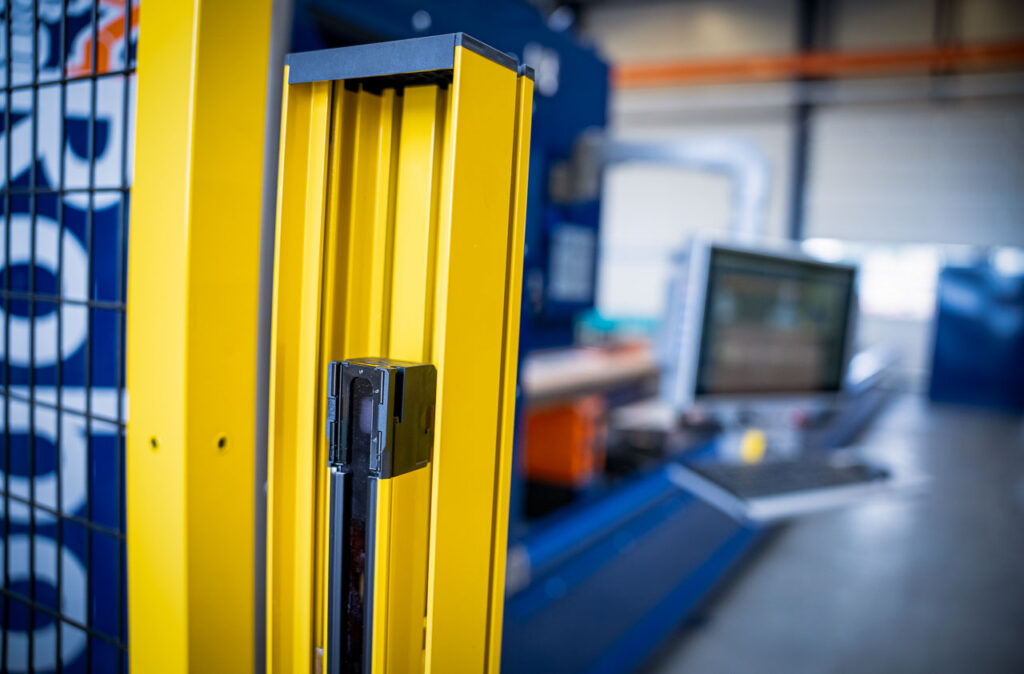
  • Optional safety fencing supports a controlled production environment

Intelligent CAD/CAM Integration

  • Supports direct processing of compatible DSTV and STEP files

  • Integrates with SDS2, Tekla Structures, SolidWorks, and Autodesk Inventor

  • Reduces manual programming and simplifies complex part preparation

Automated Material Feeding & Positioning

  • Accommodates infeed material lengths up to 24 feet

  • Supports finished-part outfeed lengths up to 8 feet

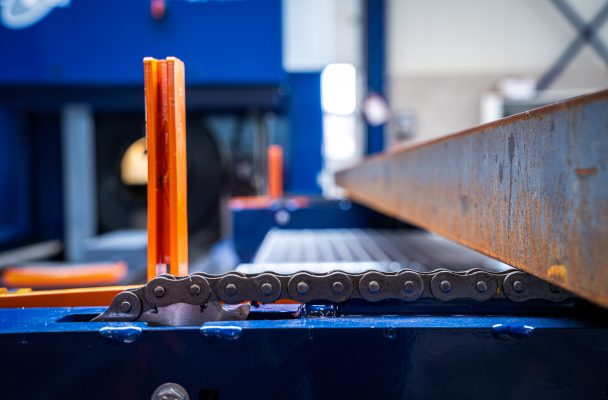
  • Integrated material positioning enables efficient cutting of varied profiles

Intuitive Operator Interface & Fast Setup

  • User-friendly controls guide operators through machine operation

  • Simplified programming reduces dependence on extensive manual layout skills

  • Compact modular design supports efficient installation and commissioning

Benefits of Choosing an HGG RoboRail System

Increase Fabrication Productivity

  • Automate repetitive cutting, coping, notching, and layout operations

  • Reduce processing time compared to traditional manual fabrication methods

  • Increase throughput without relying on additional manual cutting stations

Reduce Manual Labor & Production Costs

  • Eliminate time-consuming manual measuring and layout for programmed parts

  • Reduce dependence on skilled labor for repetitive cutting operations

  • Allow fabricators to focus on assembly, welding, and higher-value tasks

Improve Cutting Accuracy & Consistency

  • Produce repeatable cutting geometries using industrial robotic technology

  • Reduce human error associated with manual layout and cutting

  • Improve part fit-up and consistency across different production runs

Process Multiple Steel Profiles on One Machine

  • Cut pipe, tubing, channels, angles, and flat bar using one integrated system

  • Eliminate unnecessary movement between separate fabrication workstations

  • Support diverse miscellaneous steel fabrication requirements

Optimize Workshop Space & Material Flow

  • Compact machine footprint reduces floor space requirements

  • Consolidate multiple cutting operations into a single production area

  • Improve material handling and shop organization

Streamline CAD-to-Cutting Workflows

  • Import compatible DSTV and STEP files directly from detailing software

  • Reduce manual programming and production preparation time

  • Improve consistency between digital designs and finished components

Improve Workplace Safety & Operator Efficiency

  • Protected cutting environment helps isolate the plasma cutting process

  • Optional safety fencing supports safer material processing

  • Guided machine controls simplify operation and reduce training requirements

Support Faster Project Turnaround

  • Reduce cutting and preparation time for stairs, handrails, railings, and structural components

  • Process unique and repeated parts efficiently without extensive manual setup

  • Improve scheduling flexibility and respond more effectively to changing production demands

RoboRail Specifications

Click the dropdowns below to view detailed specifications for the RoboRail.

RoboRail Specifications
Profile Type Minimum Size Maximum Size
Pipe Diameter 1 inch (25 mm) 10 inches (250 mm)
Box Section 1 x 1 inch (25 x 25 mm) 8 x 8 inches (200 x 200 mm)
Channel Width 3 inches (75 mm) 12 inches (300 mm)
Angle Size 1 x 1 inch (25 x 25 mm) 8 x 8 inches (200 x 200 mm)
Material Thickness 1/8 inch (3 mm) to 3/4 inch (20 mm)
Infeed Length Up to 24 feet (7,315 mm)
Outfeed Length Up to 8 feet (2,500 mm)
Maximum Infeed Weight 882 lbs (400 kg)
Cutting Process Plasma Cutting
Marking Options Layout Marking Available
CAD Integration Compatible with SDS2, Tekla, SolidWorks, Inventor, and more

RoboRail FAQ's

A:  The HGG RoboRail is an all-in-one robotic plasma cutting machine designed for miscellaneous steel fabrication.

It automates cut-to-length operations, coping, notching, hole cutting, and layout marking on a variety of structural steel profiles.

The RoboRail is particularly well suited for fabricators producing:

  • Stair stringers and stair components

  • Handrails and guardrails

  • Structural tubing assemblies

  • Miscellaneous steel supports

  • Channels and angle components

  • Round pipe connections

  • Custom steel fabrication projects

By combining multiple cutting operations into one automated system, the RoboRail helps reduce manual layout, cutting, and material handling while improving production consistency.

A:  The RoboRail is designed to process a variety of common miscellaneous steel profiles, including round pipe, square and rectangular tubing, channels, angles, and flat bar.

Supported material capacities include:

  • Round pipe: 1″ to 10″ outside diameter

  • Square tubing: 1″ × 1″ up to 8″ × 8″

  • Channels: from approximately 2″ × 1½” to 11″ × 3¾”

  • Angles: 1″ × 1″ up to 8″ × 8″

  • Flat bar: approximately ⅜” × 2″ up to ¾” × 11″

  • Material thickness: ⅛” to ¾”

The RoboRail accommodates material infeed lengths up to 24 feet, with finished-part outfeed lengths up to approximately 8 feet.

Actual cutting capacity depends on material geometry, thickness, and machine configuration.

A:  The RoboRail performs a wide range of robotic plasma cutting and profiling operations used in miscellaneous steel fabrication.

These include:

  • Cut-to-length operations

  • Straight and angled cuts

  • Pipe and tube coping

  • Notches and relief cuts

  • Bolt holes and connection holes

  • Complex profile intersections

  • Stair stringer and handrail cutting geometries

  • Layout and reference marking

Using digital cutting information, the RoboRail produces repeatable part geometries without requiring extensive manual measuring or layout.

This helps simplify downstream fitting, welding, and assembly.

A:  The RoboRail can significantly reduce processing time by automating manual layout, cutting, notching, and hole preparation.

In one documented application, a pipe cutting operation that required approximately five minutes manually was completed by the RoboRail in approximately 30 seconds.

Another customer application demonstrated that a complex cut-to-length and notching operation, which traditionally required around 80 minutes of manual preparation and processing, could be completed in approximately five minutes using the RoboRail.

Actual productivity improvements depend on part geometry, material type, operator workflow, and existing fabrication methods.

By reducing manual processing time, the RoboRail allows fabrication teams to increase throughput and dedicate more labor to fitting, welding, and assembly.

A:  Yes. The RoboRail supports direct processing of compatible DSTV and STEP files, allowing cutting information to be transferred from digital models into production.

Compatible detailing and CAD systems include:

  • SDS2

  • Tekla Structures

  • SolidWorks

  • Autodesk Inventor

  • Additional systems capable of producing supported file formats

This integration reduces the need for manual programming and helps maintain consistency between engineering designs and finished components.

The RoboRail is especially useful for miscellaneous steel fabricators processing unique parts, where every component may require a different cutting geometry.

A:  Yes. The RoboRail is designed to make robotic plasma cutting accessible to fabrication shops that want to increase automation without installing several separate cutting machines.

Its compact, integrated design combines robotic cutting, material positioning, and a protected cutting environment into one production system.

The machine is particularly valuable for shops that regularly produce stairs, railings, structural supports, and miscellaneous steel components.

By reducing manual layout and cutting requirements, the RoboRail can help smaller teams handle more work while maintaining consistent part quality.

The best fit depends on your material sizes, production volume, available floor space, and current fabrication processes.

A:  The RoboRail features a protected cutting cell designed to help isolate the robotic plasma cutting process from the surrounding fabrication area.

Available safety features and equipment include:

  • Enclosed robotic cutting environment

  • Optional perimeter safety fencing

  • Controlled material feeding and positioning

  • Operator interface positioned outside the cutting area

  • Integrated machine controls and safety systems

Safety fencing can be supplied as part of the machine installation or incorporated into a facility-specific layout.

Final safety requirements depend on the installed configuration, applicable regulations, and the customer’s operating environment.

A: The RoboRail is an excellent solution for shops that regularly process multiple types of structural steel profiles and want to reduce manual cutting and layout operations.

Important considerations include:

  • Types of steel profiles being processed

  • Minimum and maximum material dimensions

  • Material thickness and weight

  • Required cutting, coping, and notching operations

  • Production volume and part complexity

  • Existing CAD/CAM or detailing software

  • Available workshop space

  • Current labor requirements and production bottlenecks

  • Material loading and unloading workflow

The RoboRail is especially beneficial for stair, railing, handrail, and miscellaneous steel fabricators seeking to consolidate several manual processes into one automated cutting system.

Bramac Machinery can review your materials, production requirements, and facility layout to help determine whether the RoboRail is the right fit for your operation.