Heavy-Duty Robotic Plasma Beam Coping & Structural Steel Cutting Machine
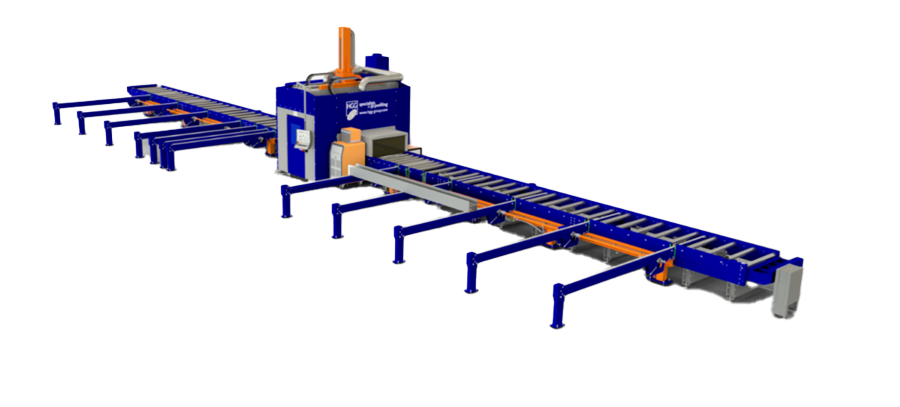
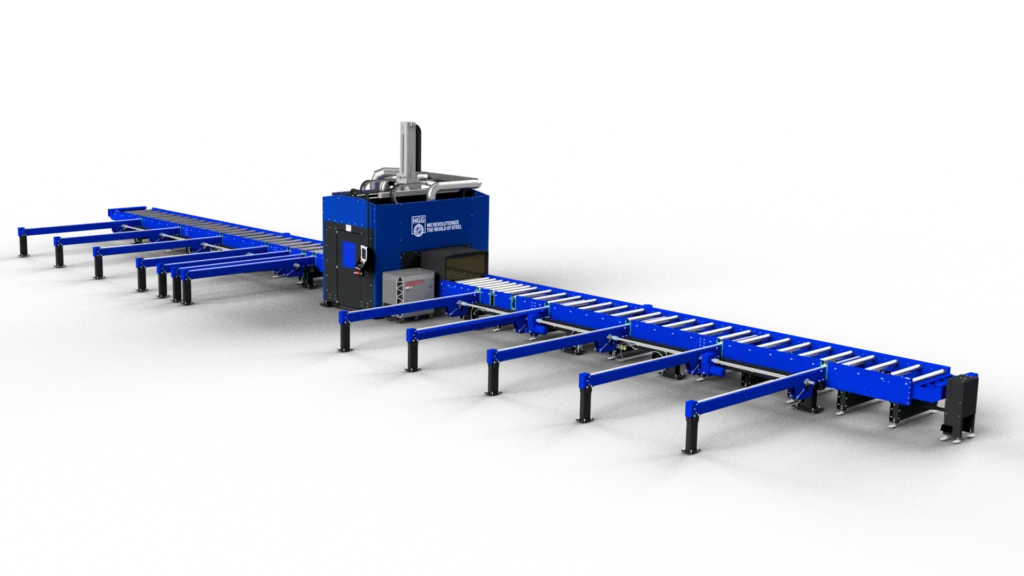
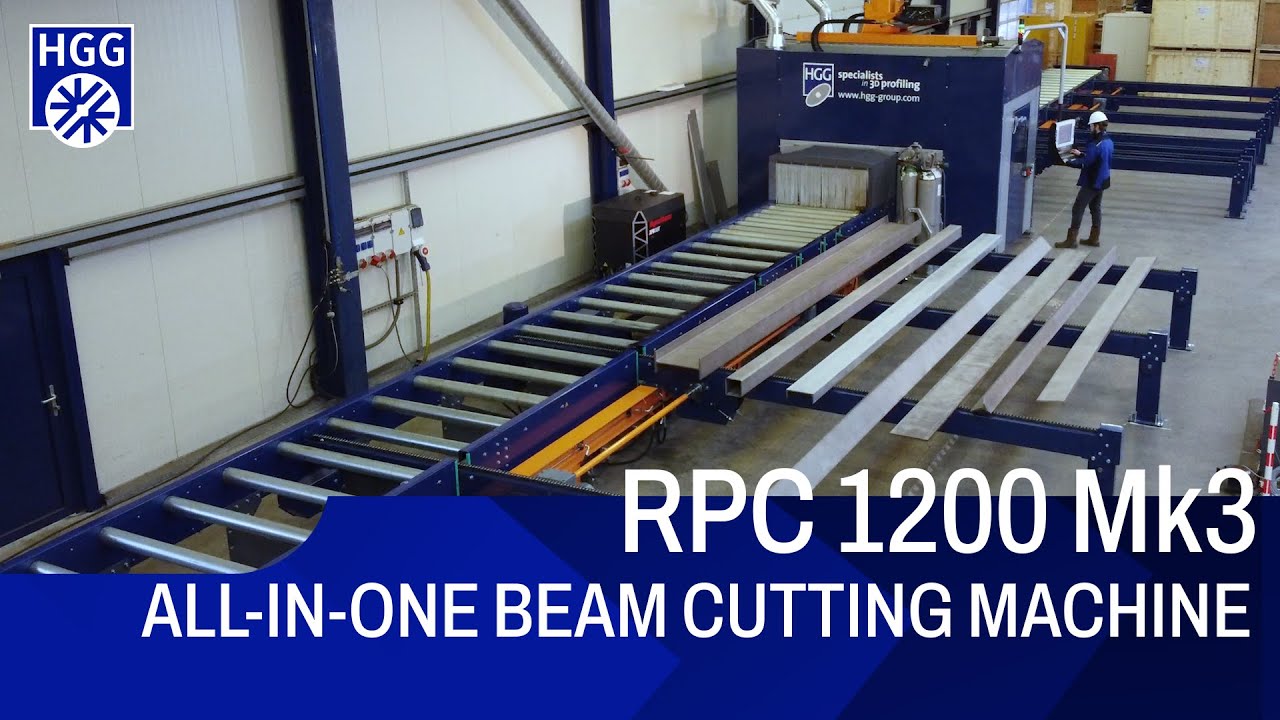
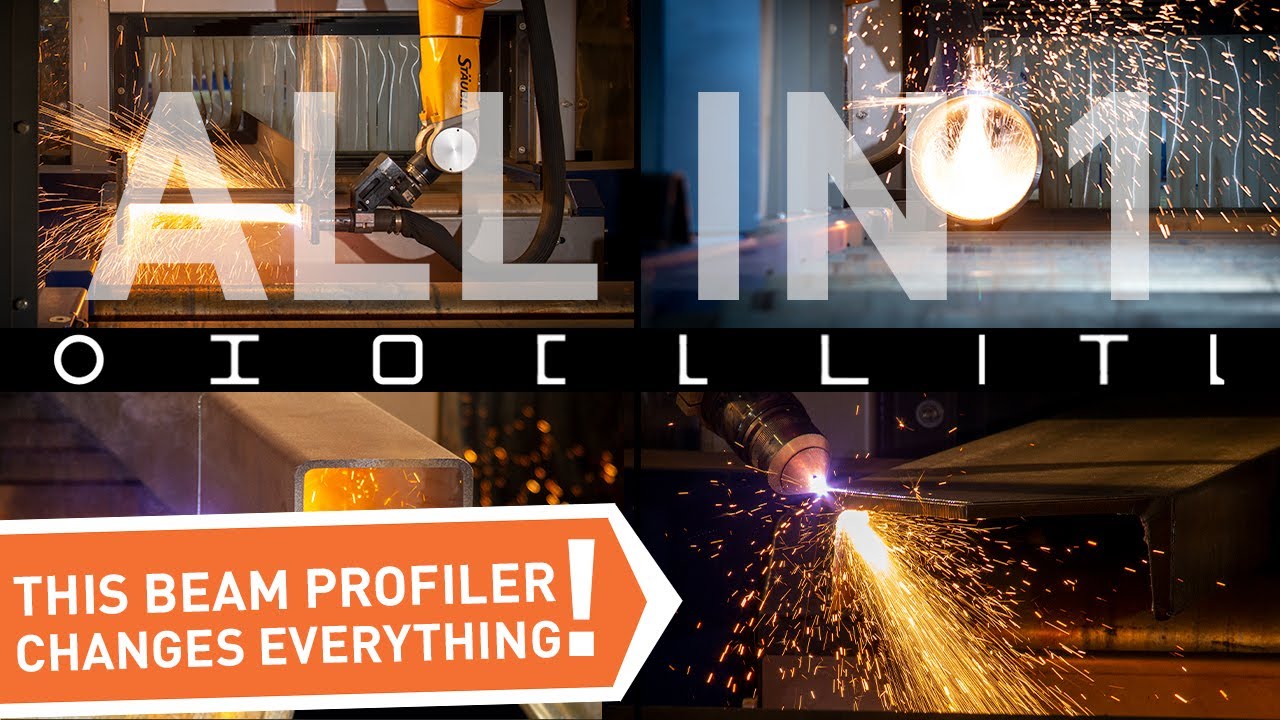
The HGG RPC 1200 Mk3 is a heavy-duty robotic plasma cutting machine engineered for high-precision beam coping, complex weld preparations, and automated structural steel fabrication. Combining high-definition plasma cutting, advanced 3D laser measurement, and intelligent robotic profiling technology, the RPC 1200 Mk3 processes large structural beams and a wide range of steel profiles with exceptional versatility. Designed to streamline production and reduce secondary fabrication operations, this all-in-one solution helps steel fabricators improve cutting accuracy, reduce labor-intensive processing, and produce ready-to-fit components for welded and bolted connections.
The RPC 1200 Mk3 is designed for structural steel fabricators and heavy industrial manufacturers seeking greater accuracy, flexibility, and production efficiency when processing large steel profiles. Built around an advanced robotic cutting cell, the machine combines multiple fabrication operations—including beam coping, precision hole cutting, weld preparation, bevel cutting, and layout marking—into one integrated production system.
Unlike conventional cutting methods that require multiple machines and manual operations, the RPC 1200 Mk3 uses high-definition plasma technology and specialized cutting routines to produce complex, ready-to-fit components directly from digital designs. Its 3D laser measurement system detects variations in material position and geometry, allowing the machine to compensate for deviations before cutting.
Capable of processing structural beams up to 48″ × 17″, along with channels, hollow sections, angles, T-bars, and other steel profiles, the RPC 1200 Mk3 provides the flexibility required for demanding fabrication environments. Combined with HGG ProCAM software and automated material handling options, it helps manufacturers reduce processing steps, improve production consistency, and increase overall shop efficiency.
Heavy-Duty Robotic Beam Coping
Processes large structural beams up to 48″ × 17″
Performs complex copes, cutouts, bolt holes, and weld preparations
Supports heavy-duty structural steel and offshore fabrication applications
High-Definition Plasma Cutting Technology
Produces precise cuts across a wide range of structural steel profiles
Supports complex cutting geometries and bevel preparations up to 45°
Integrates cutting and marking operations into one production system
Advanced 3D Laser Measurement
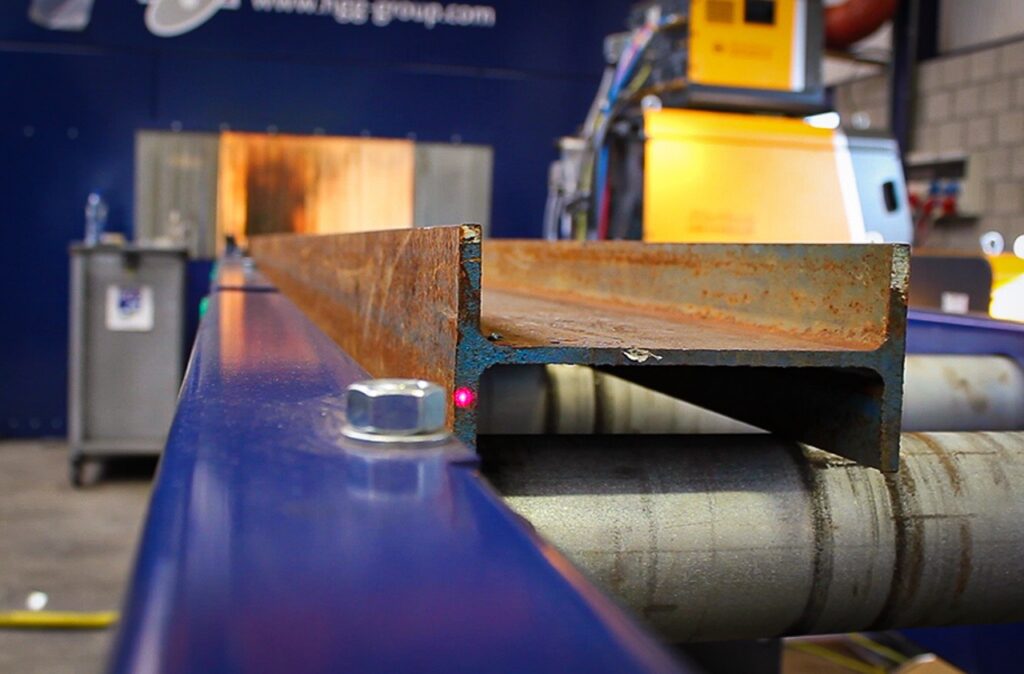
Measures actual material geometry before cutting
Compensates for material positioning errors, twisting, and dimensional deviations
Improves cutting consistency and reduces downstream fit-up adjustments
Multi-Profile Cutting Versatility
Processes H-beams, channels, box sections, angles, and other structural profiles
Supports both welded and bolted connection preparations
Handles complex geometries without requiring multiple dedicated cutting machines
Automated Plasma Marking
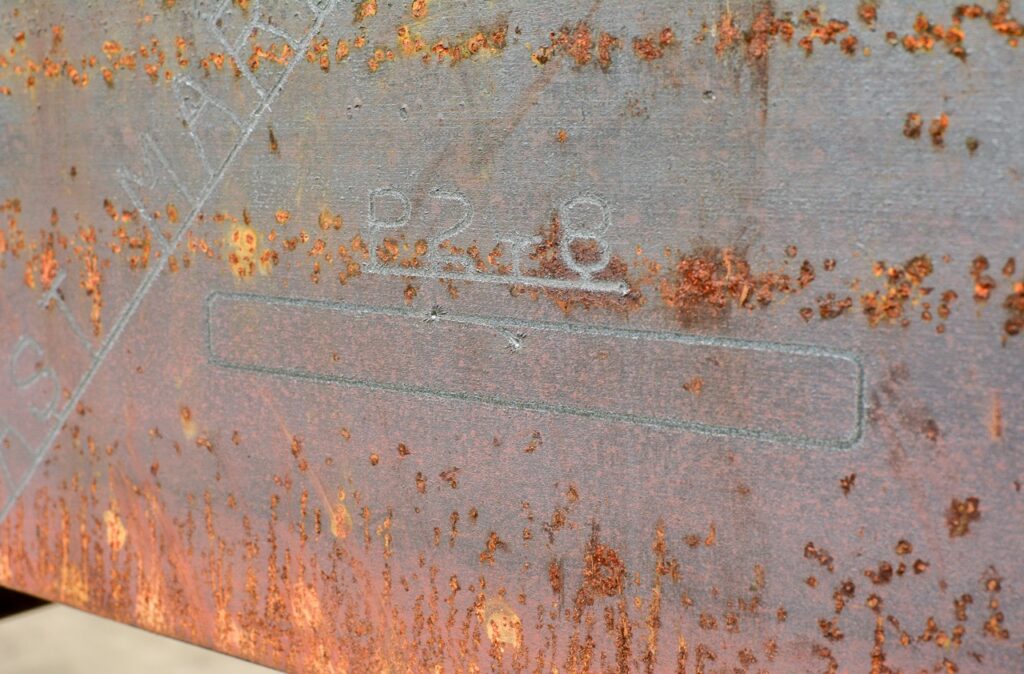
Marks part identification, layout lines, and assembly reference points
Reduces manual measuring and layout operations
Supports faster positioning, fitting, and downstream assembly
HGG ProCAM Software Integration
Imports NC/DSTV and STEP data for efficient production preparation
Connects digital design workflows directly to machine cutting operations
Includes profile visualization, cutting macros, and nesting capabilities
Robotic Cutting Cell & Material Handling
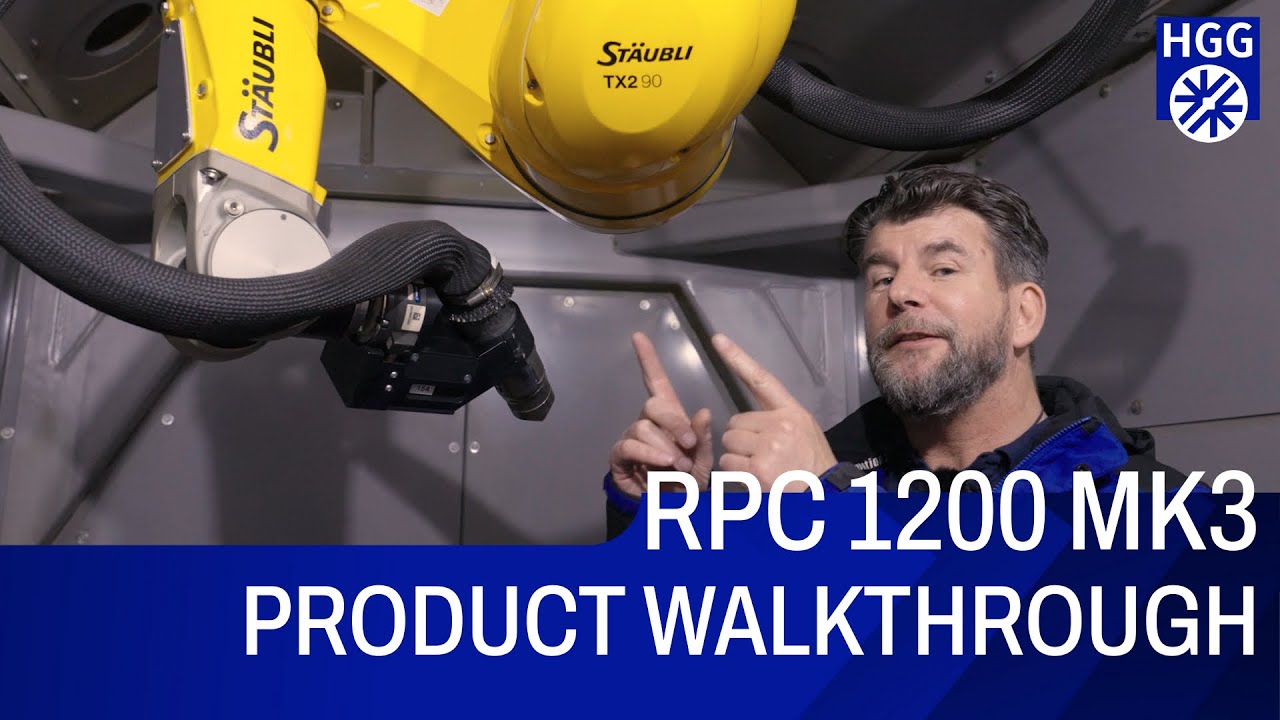
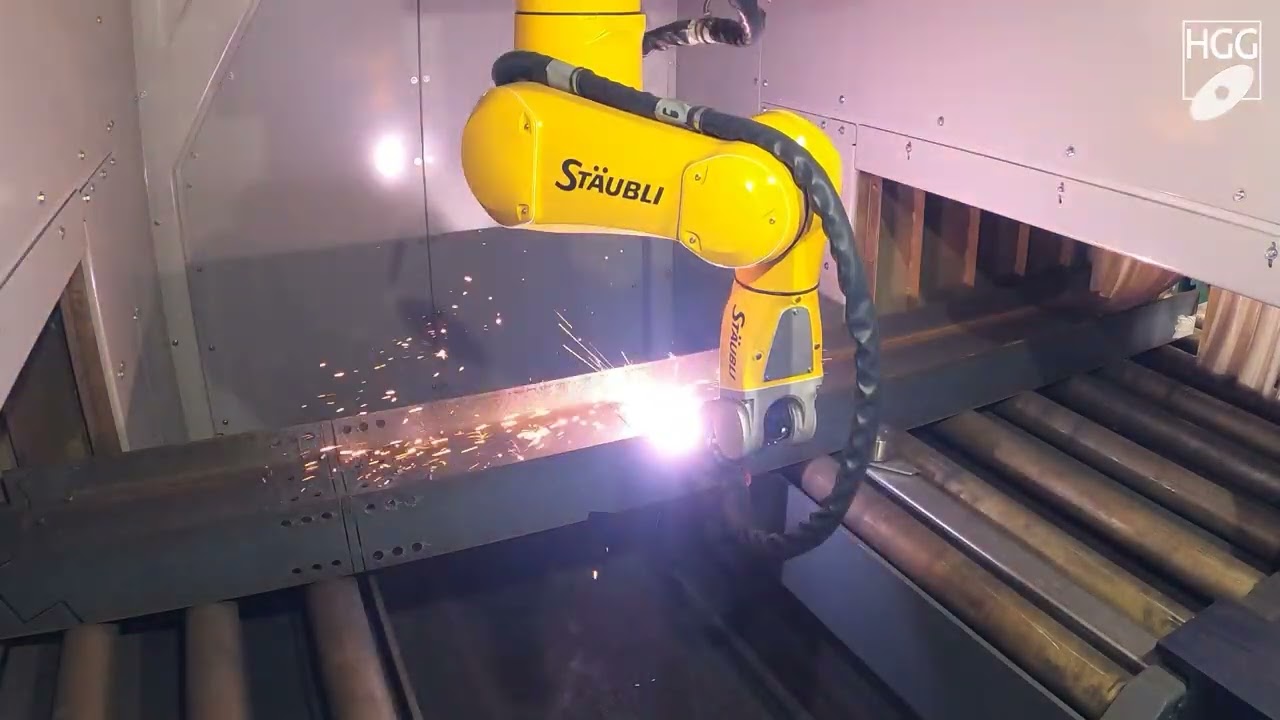
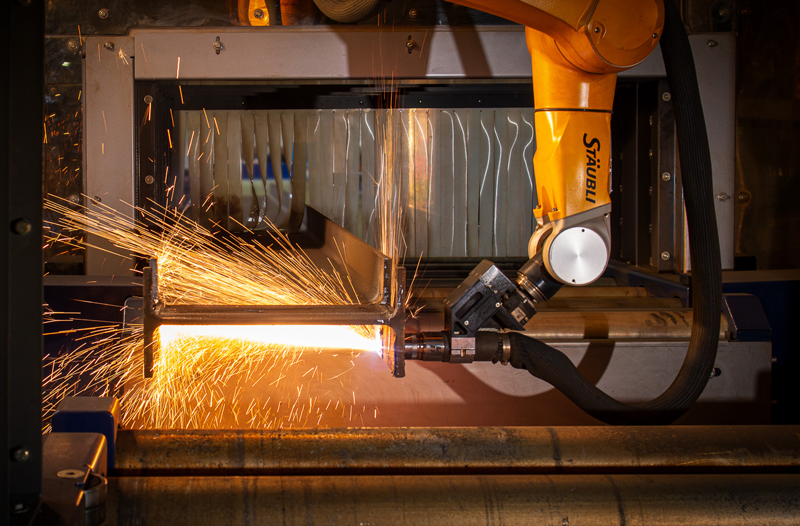
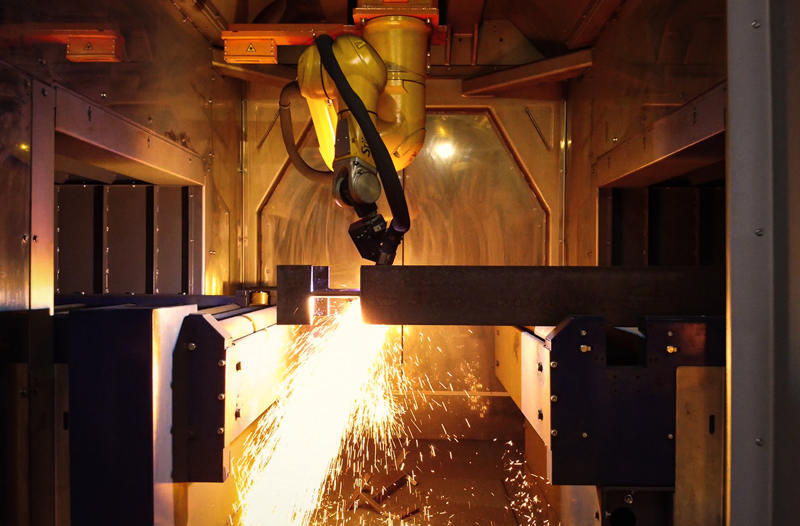
Industrial Stäubli robotic arm provides precise torch positioning
Enclosed cutting cell helps contain sparks, fumes, and cutting noise
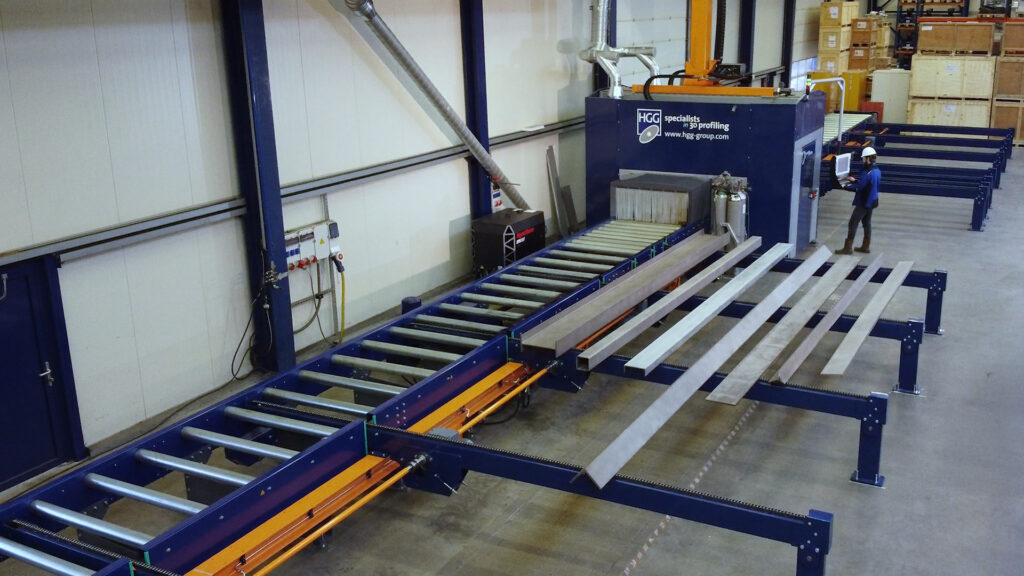
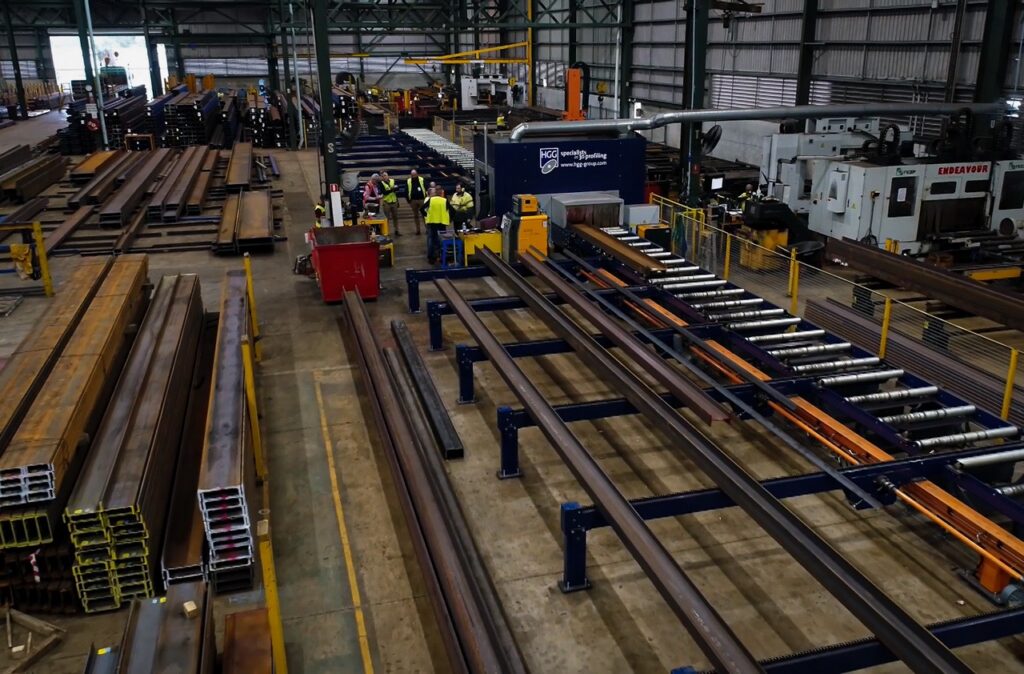
Conveyor-based material transport with optional storage and handling systems
Efficient Production-Focused Design
Consolidates cutting, coping, beveling, and marking into one machine
Reduces manual processing and material movement between workstations
Supports efficient shop layouts and higher-volume structural steel production
Increase Structural Steel Production Efficiency
Automate time-consuming cutting and coping operations
Reduce material transfers between fabrication workstations
Improve overall production throughput and machine utilization
Reduce Secondary Fabrication Operations
Produce ready-to-fit parts for welded and bolted connections
Perform bevel cutting, coping, hole cutting, and marking in one process
Minimize manual grinding, drilling, layout, and rework
Improve Cutting Accuracy & Fit-Up Quality
Compensate for material deviations using 3D laser measurement
Maintain consistent cutting geometry across complex steel profiles
Reduce alignment issues during welding and assembly
Expand Fabrication Capabilities
Process a broad range of structural steel shapes and sizes
Produce complex connection details and specialized weld preparations
Take on demanding projects involving heavy structural steel components
Lower Labor Requirements & Processing Costs
Reduce dependence on multiple manual fabrication operations
Minimize repetitive measuring, marking, and handling tasks
Improve consistency while making more effective use of skilled labor
Streamline CAD-to-Production Workflows
Import digital part files directly into HGG ProCAM software
Reduce manual programming and production preparation time
Improve coordination between engineering, cutting, and assembly
Optimize Shop Floor Space & Material Flow
Combine multiple fabrication capabilities within one robotic cutting system
Integrate conveyors and optional material storage solutions
Support organized, repeatable production workflows
Support Long-Term Fabrication Growth
Increase capacity for larger and more complex steel fabrication projects
Improve production flexibility as customer requirements evolve
Build a scalable foundation for automated structural steel processing
Click the dropdowns below to view detailed specifications for the RPC 1200 Mk3.
| RPC 1200 Mk3 Specifications | |
|---|---|
| Profile Types | Beams, Tubes, Angles, Channels, Square Tubes, Plates, T-bars, Bulb Flats |
| Minimum Profile Size | 100 x 5 mm (4″ x 0.2″) |
| Maximum Profile Size | 1220 x 430 mm (48″ x 17″) |
| Cutting Process | High-Definition Plasma Cutting |
| Marking Options | Plasma Marking with Cutting Torch |
| Power Source | Hypertherm or Kjellberg |
| Additional Features | 3D Laser Measurement, Automated Cutting and Marking, Integration with 3D CAD Software |
A: The RPC 1200 Mk3 is designed to process a wide range of structural steel profiles commonly used in construction, heavy fabrication, and offshore applications.
Supported profiles include:
H-beams and I-beams
Square and rectangular hollow sections
Structural channels
Equal and unequal angles
T-bars
Flat bars and plate profiles
Bulb flats
The machine accommodates large structural beams up to 1220 × 430 mm (48″ × 17″), with additional cutting capacities depending on profile geometry.
This versatility allows fabricators to process multiple structural shapes on one machine, reducing the need for separate cutting equipment.
A: The RPC 1200 Mk3 combines multiple structural steel fabrication processes into one automated robotic cutting system.
Its capabilities include:
Structural beam coping and notching
Precision bolt hole cutting
Straight and angled profile cutting
Bevel cutting up to 45°
Complex weld preparations, including K-bevels
Rathole cutting
Plasma layout and text marking
Preparation of welded and bolted connections
Specialized cutting routines, including HGG’s PerfectHole™ technology, help produce accurate connection details and reduce secondary processing requirements.
By completing multiple operations in one setup, the RPC 1200 Mk3 helps reduce manual handling, improve consistency, and streamline fabrication workflows.
A: The RPC 1200 Mk3 uses advanced 3D laser measurement technology to identify differences between the programmed profile geometry and the actual material being processed.
Structural steel can contain dimensional variations, twisting, bending, or positioning deviations that affect cutting accuracy.
The machine’s measurement system identifies these variations and adjusts the cutting process accordingly.
Key advantages include:
Compensation for material positioning deviations
Detection of twisting and dimensional inconsistencies
Improved cut placement and profile geometry
More consistent bolt holes and connection preparations
Reduced manual rework during fitting and assembly
A separate longitudinal laser measurement system helps maintain accurate finished-part lengths.
This technology is especially valuable when processing large structural sections where dimensional variations can create significant downstream fabrication challenges.
A: The RPC 1200 Mk3 improves production efficiency by combining cutting, coping, beveling, hole cutting, and marking into one automated process.
Traditional structural steel fabrication often requires multiple workstations, manual measuring, drilling, grinding, and repeated material handling.
The RPC 1200 Mk3 helps reduce these operations by producing parts that are prepared for downstream fitting, welding, or bolted assembly.
Potential efficiency improvements include:
Reduced manual cutting and layout work
Fewer material transfers between workstations
Less secondary drilling and grinding
Improved consistency between repeated parts
Faster preparation of complex structural connections
Better utilization of skilled fabrication labor
Integrated plasma marking can also reduce fit-up time by up to 20%, depending on the application and existing production process.

A: Yes. The RPC 1200 Mk3 utilizes HGG ProCAM software to connect structural steel design data with automated cutting operations.
The software supports importing common fabrication file formats, including DSTV/NC1 and STEP, and integrates with workflows using leading structural steel detailing platforms.
Supported software ecosystems include:
Tekla Structures
SDS2
STRUMIS
M-Suite
PypeServer
Additional compatible CAD/CAM platforms
HGG ProCAM also provides part visualization, predefined cutting macros, and nesting capabilities to simplify production preparation.
This allows fabricators to move efficiently from digital design to finished structural components while reducing manual programming requirements.
A: Yes. The RPC 1200 Mk3 uses conveyor-based material transport and can be configured with additional handling equipment to support efficient production workflows.
Available material handling arrangements include:
Infeed roller conveyors
Outfeed roller conveyors
Optional material storage chains
Crane-assisted loading and unloading
Forklift-compatible material handling arrangements
Optional storage chains can help buffer incoming material and completed parts, reducing interruptions between cutting cycles.
Bramac Machinery can help evaluate your facility layout, material lengths, available floor space, and production requirements to determine the most effective machine and material handling configuration.
A: The RPC 1200 Mk3 is particularly well suited for manufacturers processing large structural steel sections and complex connection geometries.
Common applications include:
Structural steel fabrication
Commercial and industrial construction
Heavy equipment manufacturing
Offshore steel structures
Shipbuilding and marine fabrication
Bridge and infrastructure construction
Industrial machinery and support structures
Contract steel processing and fabrication
The machine is especially valuable for fabricators producing complex welded assemblies, large structural connections, and components requiring accurate bevels, copes, and bolt holes.
Its combination of heavy-duty capacity, robotic precision, and multi-profile versatility makes it suitable for both specialized fabrication projects and higher-volume structural steel production.
A: Selecting the right robotic beam coping machine depends on your material sizes, production volume, connection requirements, and existing fabrication processes.
Important considerations include:
Maximum and minimum structural profile dimensions
Material thickness and weight
Required cutting and beveling operations
Annual or monthly production volume
Current manual cutting and drilling requirements
CAD/CAM software compatibility
Available facility space and material handling equipment
Opportunities to reduce secondary fabrication operations
The RPC 1200 Mk3 is an excellent option for fabricators processing large structural profiles that require complex cuts, accurate weld preparations, and consistent production quality.
Bramac Machinery can review your applications, production goals, and facility requirements to help determine whether the RPC 1200 Mk3 is the right solution for your operation.